






















Beech Bark Medicine
Book Excerpt: A commentary on a 50-year-old medicine, which raises the question: ˜Why is pentosan polysulphate not a treatment option? Essential reading crammed with information for those diagnosed with rheumatoid arthritis or osteoarthritis.
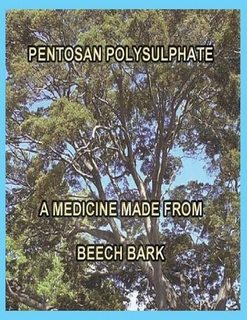
Pentosan Polysulfate: A Medicine Made From Beech Bark
Linda Curreri had rheumatoid arthritis for 28 years, from 1974 at age 26.
In 2001, her GP began treating her with muscular pentosan polysulfate injections. Over the following three years, blood tests showed conclusively that her rheumatoid factor had returned to a normal limit, and no health anomalies were present. Linda experienced no adverse effects from this medicine. Her health is undeniably in very good shape. However, the same cannot be said of her musculoskeletal system, which was severely damaged by the disease of arthritis. Her book brings the many profound facts about this medicine from beech bark to our attention and includes an account of her efforts over four years to source pentosan polysulfate. Her introduction to pentosan polysulfate was in May 1996, while on a visit to Australia. Here is how it all began.
TAPESTRY FOR JETHRO TULL
I had stitched what turned out to be an impressive tapestry of the 1978 Jethro Tull Heavy Horses album cover and decided to gift it to Tull. This was arranged with the NZ promoter, but two weeks before they toured New Zealand and Australia, the group’s flute-wielding leader, Ian Anderson, was rushed to hospital in Sydney with a leg thrombosis. Their concerts were cancelled, and there was disappointment all around. Jethro Tull in concert would have been a spectacular event, and they would not receive the tapestry. My neighbour Jock Benfell said let’s go (to Australia)and I will pay!
Deal!
Three days later, we flew to Sydney. It turned out that Jock’s brother Brian, who was living in Melbourne, was an acquaintance of the Australian promoter Paul Dainty, and so we headed there.
The superbly framed tapestry was farewelled from Brian’s home on its journey to Ian Anderson, who was convalescing in Sydney after successful treatment. He was delighted with it.
While staying with Brian and his family at their home at the Oaklands Hunt Club near Melbourne, Brian, the club’s Master of the Hunt, learned I had rheumatoid arthritis. The subject of medicine used by veterinarians to treat animals with arthritis was raised. Brian handed me a leaflet about the medicine called Cartrophen (r/pentosan polysulfate and suggested I ask my doctor about it when I returned to NZ.
Some months earlier, Brian’s main mount, Grey, had suddenly developed lethargy and an inability to jump and was retired to pasture. A veterinarian member of the hunt club suggested to Brian that he inject Cartrophen into the muscles of his champion show jumper. Brian did this, and Grey immediately became like a teenager running and jumping about the paddock. That season, Brian led the hunt on Grey.
When I returned to NZ, I took Brian’s advice and contacted a rheumatologist about Pentosan Polysulfate. This first enquiry led to six years of research in medicine. I read biology dictionaries from cover to cover to understand the basic meaning of the complicated language that governs approaches to the science, and questioned the disinterested, almost negative stance of the medical profession and health officials towards this sulphated sugar from beech bark.
Learning about pentosan polysulfate was exciting and alarming: if Ian Anderson had not fallen seriously ill in Sydney, my extraordinary adventure would not have happened!
PENTOSAN POLYSULFATE’S PHARMACOLOGY
A closer look at the multiple therapeutic effects (modes of action) of this medicine:
- Supports and enhances the macromolecular biosynthesis by chondrocytes of DNA, RNA, collagen, proteoglycans and extracellular matrix. Basically, this means that pentosan helps our DNA to correctly produce the proteins which make all of our connective tissues, every part of us.
- Supports and enhances synovial lining cell synthesis of synovial fluid components, especially hyaluronic acid, which keeps the fluid functioning optimally as a lubricant and protector of the cartilage surfaces. Ensures the proper maintenance of joints.
- Inhibits degrading enzymes and/or mediators implicated in the degeneration of cartilage, extracellular matrix and synovial components. i.e. hyaluronidase, collagenase, metalloproteinases, cathespins, interleukin-1, tumour necrosis factor (TNF), PGE2. Very simply put, diseases and infections are stopped in their tracks.
- Mobilizes blood clots; blood flow and perfusion of joint tissues and subchondral bone is increased as a result. Fibrin, lipids and cholesterol deposits are also mobilized and cannot build up. Cardio-vascular activity. Ensures optimal blood supply and circulation; prevents arteries from clogging up.
(NB: A copy of pentosan polysulphate pharmacology minus the author’s comments can be found on page 64 of Linda’s full journal
Pentosan polysulphate acts on the underlying causes of disease, directly stimulating healing and repair. Ref:www.enzogenol.com
GERMAN ORIGINS
In Germany in 1947, Dr. Wilhelm Benend synthesized a new medically active substance called sodium pentosan polysulfate. Two years later, in 1949, Dr. Benend established a small pharmaceutical company in the south of Munich called Bene-Arzneimittel GmbH.
The enormous experience gained from the intensive research with sodium pentosan polysulfate led to the development by this company of numerous finished medications that found international recognition. Sodium pentosan polysulfate quickly gained a huge reputation with physicians and patients due to its outstanding characteristics in several treatment areas. Over-the-counter preparations of pentosan polysulfate have been developed by Bene-Arzneimittel GmbH, as well as those requiring a prescription. Ref: www.bene-gmbh.de
WHAT IS PENTOSAN POLYSULFATE?
Pentosan polysulfate is a sulphated sugar. It is a generic, water-soluble medicine made of the xylose sugar in beech bark. Pentosan is a polysaccharide of the monosaccharide pentose sugar. The negative sulphate groups enable pentosan to reach high concentrations in the extracellular matrix, the defining feature of connective tissue. Simply put, pentosan polysulfate is a sulphated carbohydrate. Ref # 50
IS PENTOSE SUGAR IMPORTANT?
Yes. Pentose sugar is unique. Unlike other carbohydrates, i.e. glucose, fructose, lactose, maltose, which are 6-carbon (hexose) sugars, pentose sugar is a 5-carbon molecule, which has a crucial role in human biology. Pentose is the sugar component in DNA, our genetic code. Ref # 50
DNA is Deoxyribose-Nucleic Acid; deoxyribose is a pentose sugar. If pentose sugar (D) is removed from DNA, only NA nucleic acid remains. This also applies to RNA. Ribose-Nucleic Acid; ribose is also a pentose sugar. Ref # 50 Pentose is indeed a very important sugar.
HEALTHY DNA = HEALTHY BODY
DNA does much more than simply provide the traits we pass on to our offspring. It also provides the blueprint for essential functions such as the activity of specialized enzymes and the making of proteins that carry out all of our cellular, tissue, organ and bodily functions.
Damage to a cell’s DNA prevents proper function and can lead to cell death. Tissue damage arising from the death of many cells often causes impaired organ and bodily function, resulting in disease. DNA damage is known to occur following exposure to oxygen-free radicals, ionizing radiation, ultraviolet light, smoke, asbestos or silica dust, pesticides, disinfectants, dioxins and other chemicals. DNA damage can be repaired by any of several essential repair mechanisms found in our cells. Eating healthy food, especially fruit and vegetables, enhances DNA repair processes and hence reduces the incidence of disease. Ref: www.enzogenol.com
PENTOSAN POLYSULFATE REPAIRS DNA DAMAGE
Pentosan polysulphate is a reagent (p30), which in chemical terms is a substance used in chemical synthesis and analysis. The prefix ‘re’ indicates the return to a previous condition, a withdrawal. Pentosan not only enhances DNA activity, but it also repairs damaged DNA, returning it to an undamaged condition and hence health is restored, especially when given sooner rather than later.
PRIME STATUS OF PENTOSE SUGAR
It could be said that pentose sugar claims the prime status in human biology as it does, after all, define the nucleic acids that contain our genetic code. Without this sugar, DNA and RNA do not exist! Neither do living organisms. Pentose sugar is, without question, absolutely crucial for life to exist.
Pentosan polysulfate is a medical preparation of pentose sugar.
VETERINARY USE
Pentosan polysulfate (Cartrophen) is used by vets to treat animals that have osteoarthritis and other arthritic joint disorders. Comments on veterinary use speak for it, and include its use on Australian camels:
PENTOSAN FOR AUSTRALIAN CAMELS.
Pentosan polysulfate is the most sophisticated approach to long-term management of osteoarthritis in camels. It is effective by both intramuscular and intra-articular injection.
Pentosan Equine(r), which contains sodium pentosan polysulphate, stimulates healing and repair, reversing the effects of osteoarthritis. Rather than simply covering up pain, pentosan polysulfate directly stimulates joint healing and repair. Pentosan Equine will not cause kidney damage as seen with NSAIDs in camels.
In their 1992 patent US 5145841, using pentosan polysulphate, Peter Ghosh and David Cullis-Hill of Athropharm make it quite clear that prolonged therapy with anti-inflammatory and corticosteroid drugs, which have been the treatments of choice for arthritis and other disorders for many decades, can lead to the breakdown and failure of connective tissues, particularly joint cartilage.
It is also explained how pentosan polysulphate prevents the growth factors of tumours. Pentosan polysulphate pharmacology supports and enhances the macromolecular biosynthesis by chondrocytes of DNA, RNA, collagen, proteoglycans and extracellular matrix.
The last paragraph of the 1992 US 5145841 [Athropharm] patent reads:’Although reference has been made to the utility of the invention in treating osteoarthritis and rheumatoid arthritis, other disease states that could be usefully treated include: bursonitis, tendonitis, tendovaginitis, and related soft tissue inflammation; wounds and healing of burns; skin repair, acne and other dermatological acute disorders; topical application for superficial thrombosis, haematoma, ulcus crusis [leg vein ulcers], softening of scars; topical anti-viral and pancreatis, emphysema and bacterial invasion where excess proteolytic [destructive enzyme] activity occurs.’ Ref 9: www.freepatentsonline.com
To read full coverage of Linda Curreri’s quest to have Pentosan Sulphate made available to New Zealanders, visit: www.naturalmedicine.net.nz/wp-content/uploads/2013/10/1-Polisulfate-to-PDF1.pdf